NIH HEAL Initiative®

$350 million. 66 communities. 4 states.¹ The NIH HEAL Initiative® (Helping to End Addiction Long-term®) brought together research, data, education, and community resources as part of a large-scale effort to address the opioid crisis. I led product and brand design for a 76-page digital platform for the HEALing Communities Study, serving a complex network of stakeholders and diverse audiences.
Stand-alone website. 76 pages.
Project Type
National Institutes of Health (NIH) and SAMHSA
Client
Design Director · Product + Brand Extension
My Role(s)
Project Highlights
Google Maps integration supporting meaningful, systems-level change · Stigma-sensitive design reducing perceived community stigma.²
Live project
Preview
Plus icon
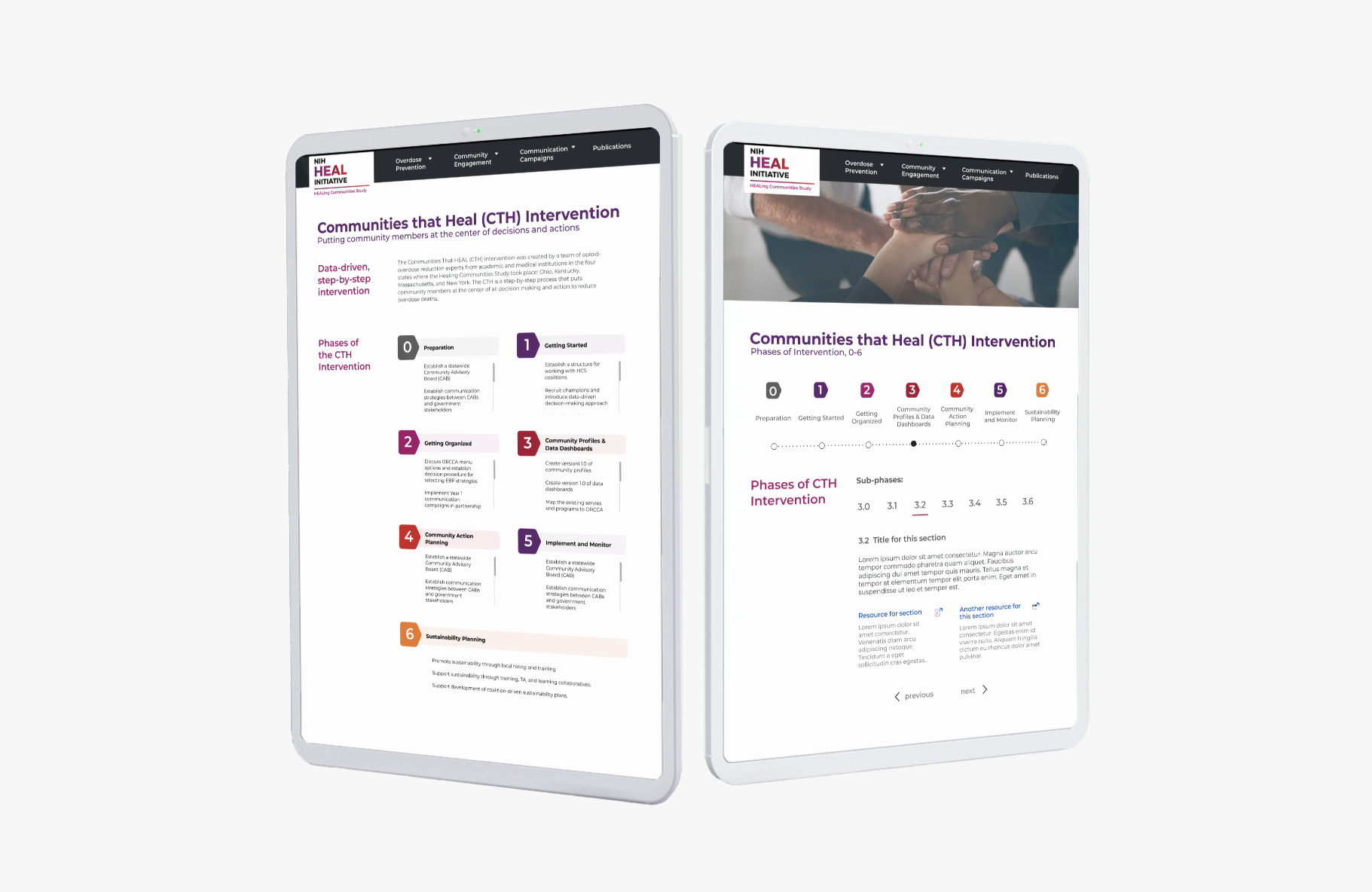
Communities that HEAL, Phase 2, Intervention website.

CHALLENGE
The scale of an $350 million initiative created intense pressure to deliver, with expectations from NIH executives and a massive, multidisciplinary coalition of community representatives. We had to navigate competing perspectives while creating a cohesive experience for audiences with vastly different goals and needs.
APPROACH
Our Agile framework brought structure to communication, priorities, and decision-making, giving me space to stay strategically grounded, articulate my design vision, incorporate diverse perspectives, and build trust while shaping a unified platform for program leaders, community coalitions, researchers, clinicians, and the broader public.
RESULT
Phase 1 drove a 104% increase in community-program naloxone distribution.³ Phase 2 scaled 615 evidence-based practice strategies.⁴ Interactive maps, local data, and tailored education connected communities with relevant resources and contributed to broader systems-level change. I, personally, strengthened my muscles for holding strong to design principles while navigating opinions and priorities far beyond the product team—a lesson that has stayed with me throughout my practice.
(Phase 1)
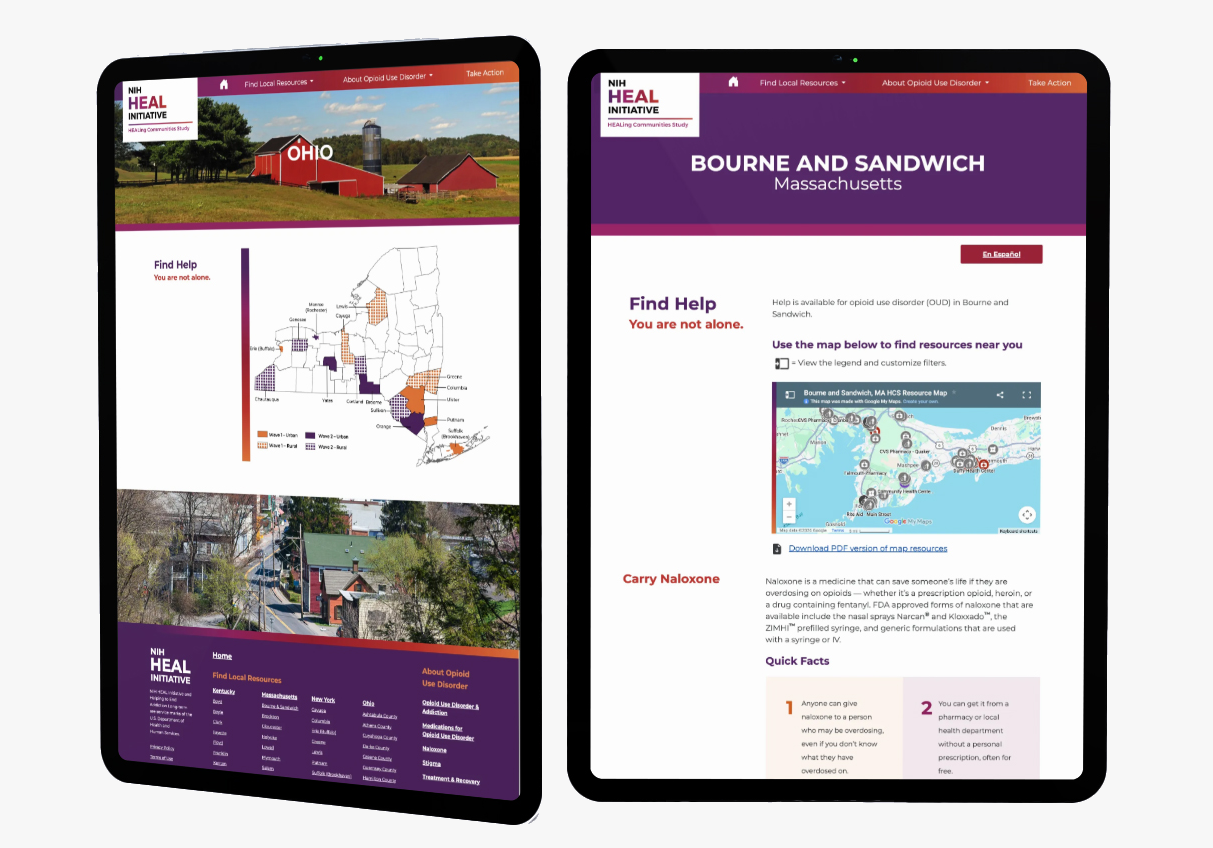
Tailored education campaigns, local data dashboards, and interactive Google Maps connected residents to harm-reduction resources. The resulting increase in naloxone distribution contributed to meaningful behavioral and systems-level change.
(Phase 1)

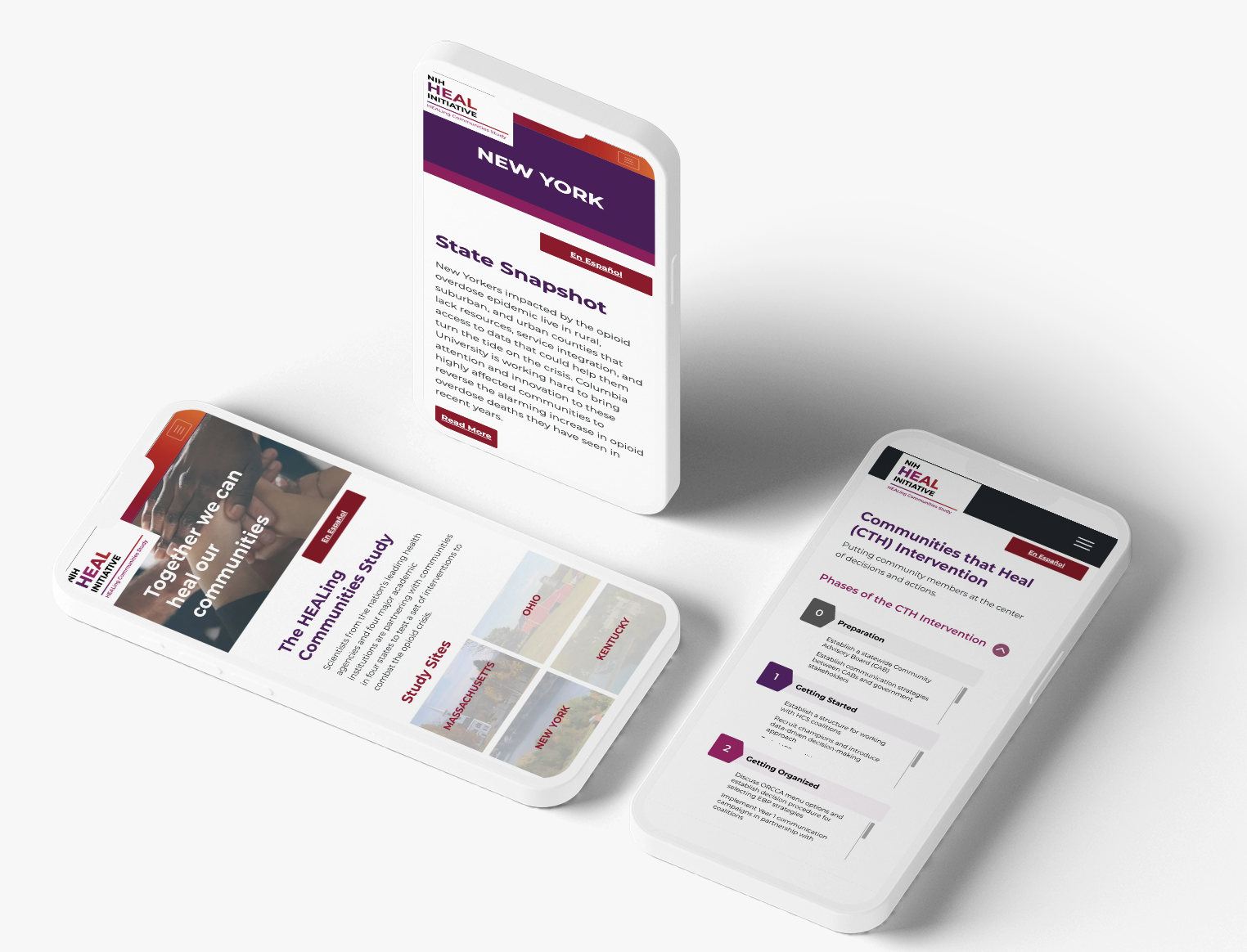
Mobile first design provided users with quick, seamless access to targeted content on any device, including finding local representatives and life-saving resources.
Phase 2 (current)

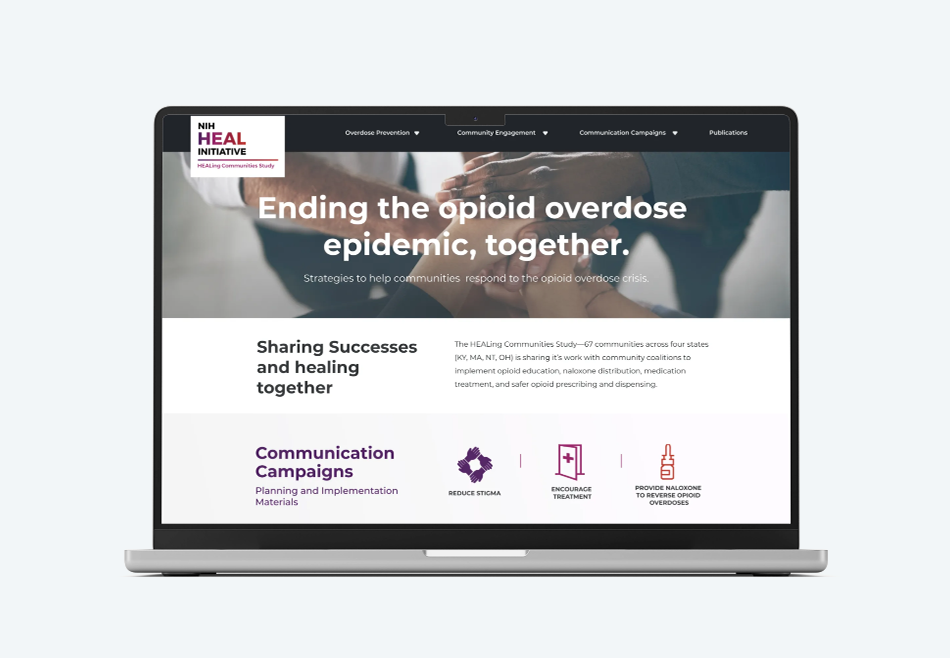
As the “Study” phase reached its final stages in late 2024, I contributed several strategic interaction designs for Phase 2. The same URL, hcs.rti.org, now hosts a national dissemination platform and serves as the study’s public face and master archive for tested toolkits, decision tools, communication playbooks, and research findings.

Sources
¹ FAQ Healing Communities Study - $350m² Davis et al. — stigma³ Naloxone Distribution — 104%⁴ 615 evidence-based practice strategies

Have a project in mind?

I’d love to hear from you — whether you have a project in mind, or just want to say hi.
Let’s Talk
Plus icon