CHALLENGE
The work centered on four priorities: rebuilding trust with a historically underserved community; communicating progress with empathy and clarity; reducing stigma while preserving scientific credibility; and representing multiple research centers without bias. Just as critically, the experience had to translate complex research into something low-effort and accessible—supporting users with limited energy and attention, while scaling cleanly across contributors.
MY APPROACH
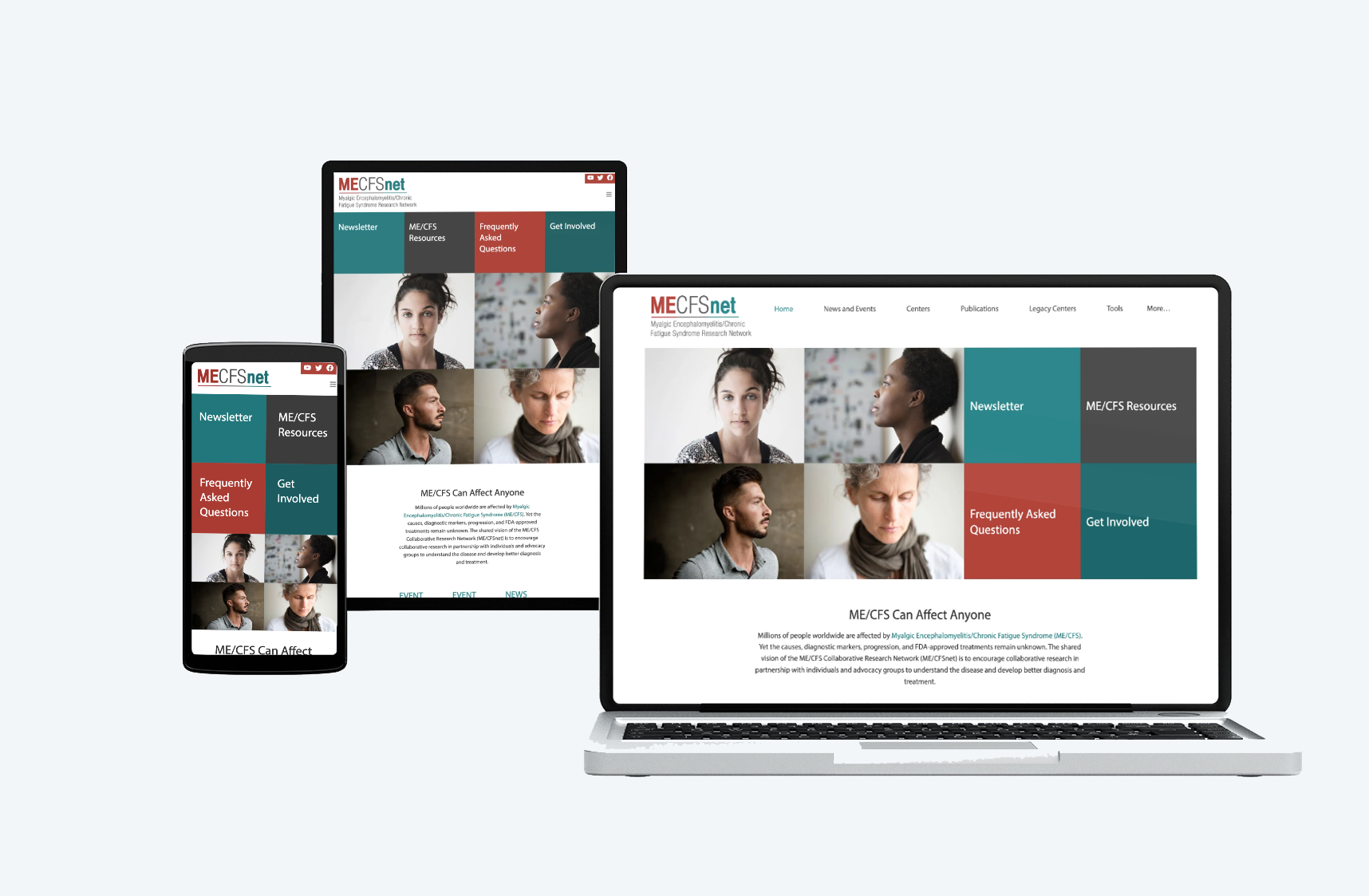
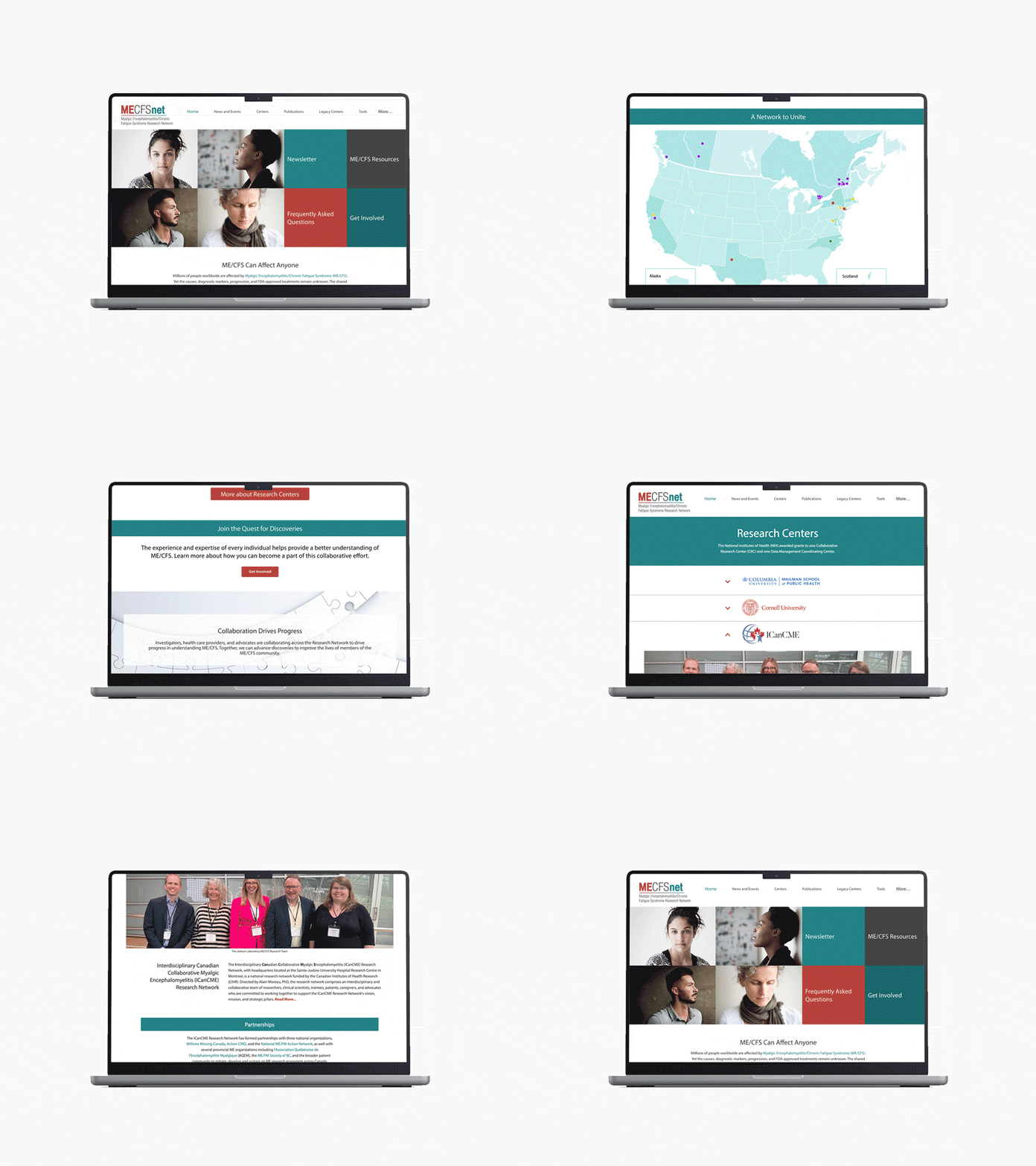
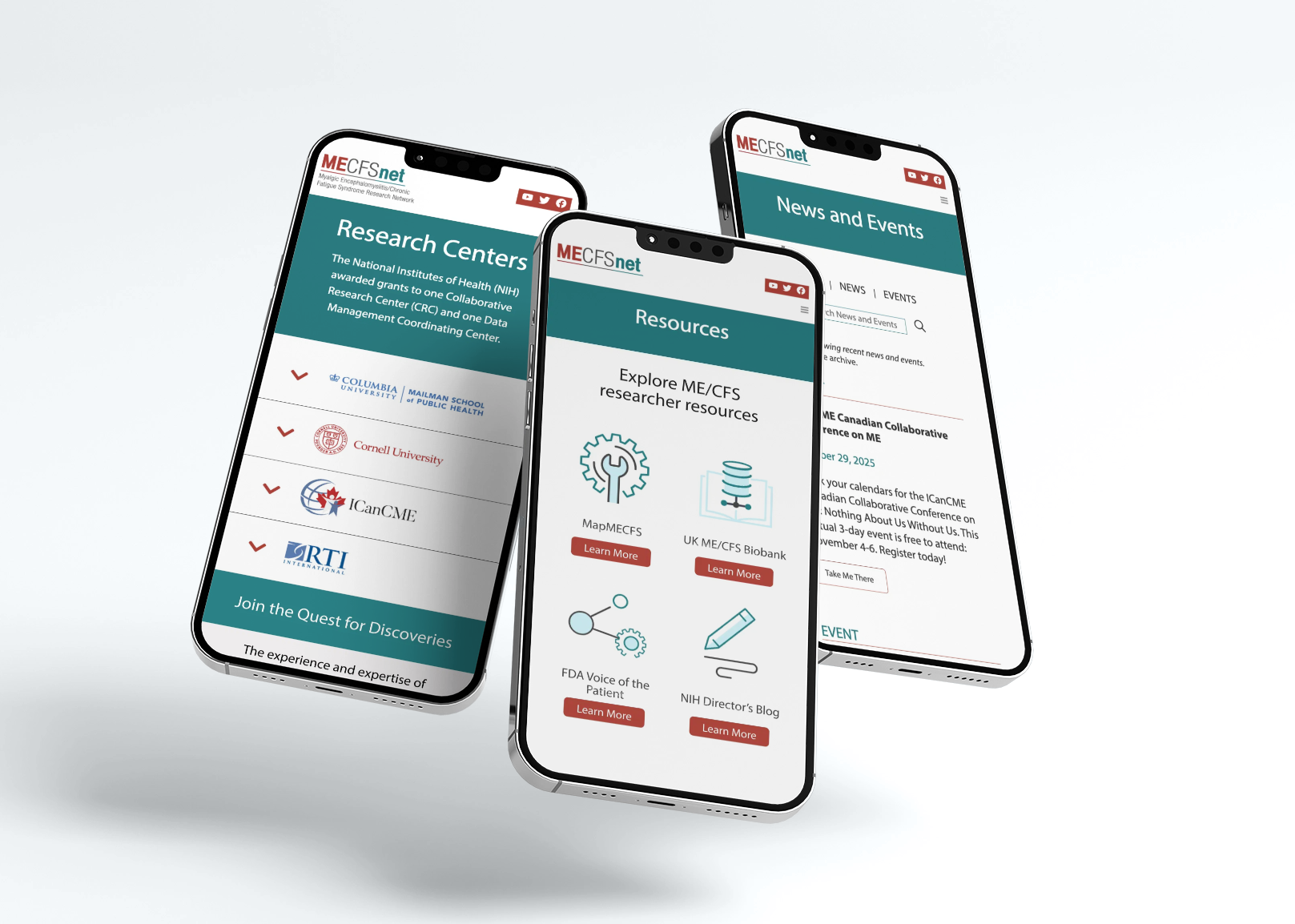
Clear, Low-Cognitive Entry Points on the Homepage reduced cognitive load and allowed users to quickly access what mattered most to them.
I designed for non-linear engagement and we implemented a system allowing users to pause and resume without losing context or data—supporting the energy limitations common within the ME/CFS community. To address internal dynamics between research centers, I created a layout system that ensured equal visibility and avoided hierarchical emphasis.
RESULTS
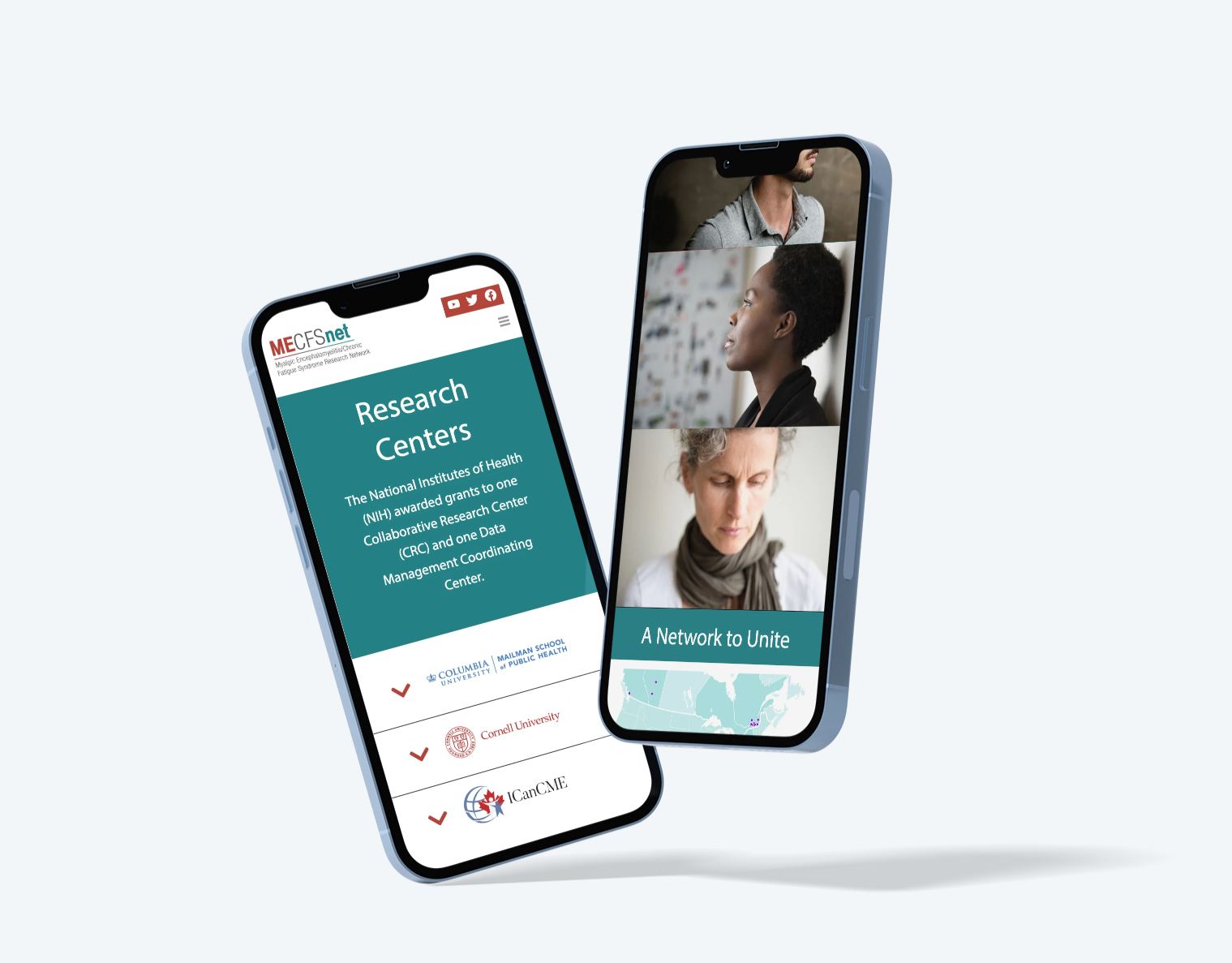
Homepage imagery is authentic, diverse, and emotionally honest—avoiding exaggerated or clinical portrayals and resonating more deeply with underserved ME/CFS patients. This approach strengthened trust and collaboration, reflected in high user satisfaction and strong engagement. As a result, the registry grew to over 4,000 participants, with steady weekly increases. The site also established a scalable brand and communication system that extended across additional ME/CFS research and impact initiatives.